
Development Liaison Advisory Committee (DLAC)
Welcome to the dedicated Greater Sudbury Development Liaison Advisory Committee (DLAC) page.
Here you can find the latest news regarding development and growth in Greater Sudbury, ask the City of Greater Sudbury team questions and find past meeting minutes and DLAC history.
DLAC is designed to bring together key development/construction industry interests (developers, construction associations, development consultants and approval authorities) for the purpose of maintaining and improving the development/construction environment within the City of Greater Sudbury.
Welcome to the dedicated Greater Sudbury Development Liaison Advisory Committee (DLAC) page.
Here you can find the latest news regarding development and growth in Greater Sudbury, ask the City of Greater Sudbury team questions and find past meeting minutes and DLAC history.
DLAC is designed to bring together key development/construction industry interests (developers, construction associations, development consultants and approval authorities) for the purpose of maintaining and improving the development/construction environment within the City of Greater Sudbury.
-
Labour Force Survey Results - August 2026
The Greater Sudbury labour force survey results for August 2026 are in.
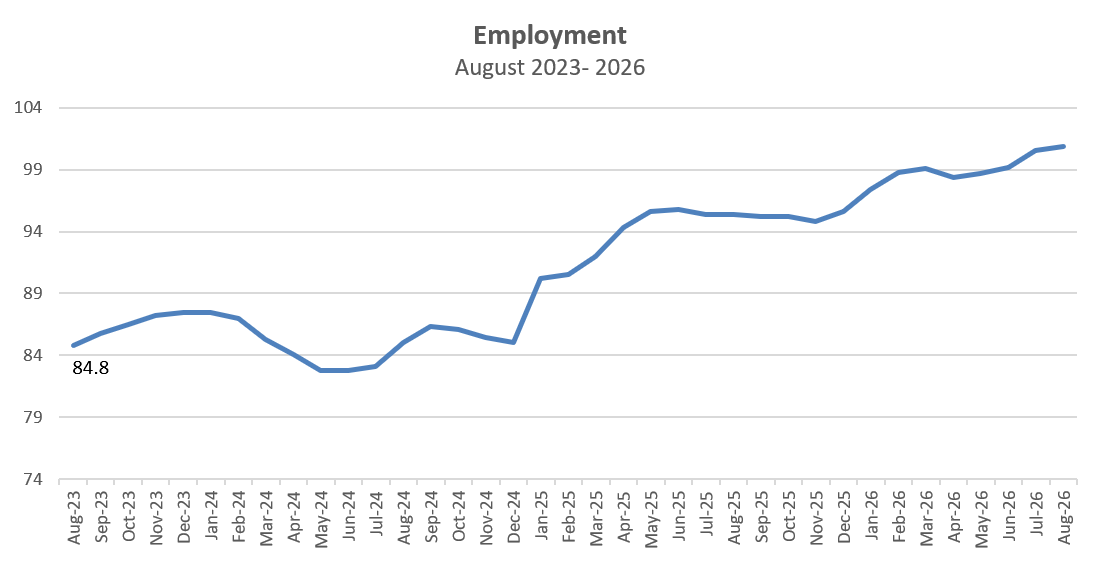
Labour Force refers to the total adult population available to the labour market at a specific time. As of August 2026, the labour force of Greater Sudbury (Census Metropolitan Area) is 107,600.
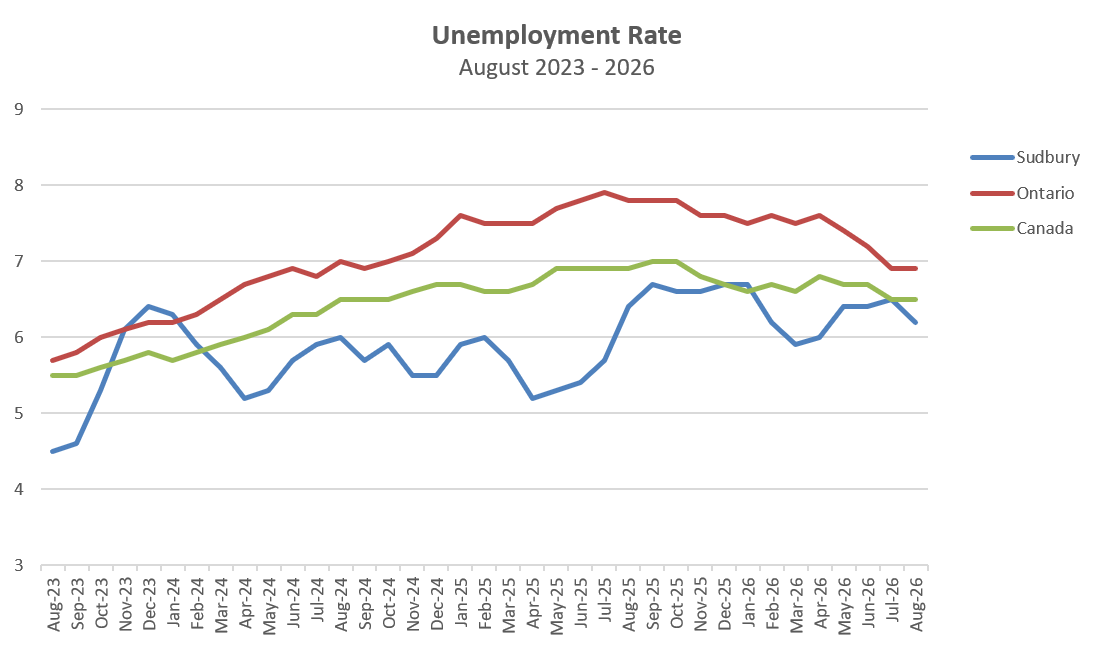
The unemployment rate for Greater Sudbury (Census Metropolitan Area) in August is 6.2%. The unemployment rate in Ontario is 6.9% and Canada is 6.5%.
The number of people employed in the city is 100,900, up from 100,600 in July 2026.
The participation rate is 65.3%.
The Greater Sudbury labour force survey results for August 2026 are in.
Labour Force refers to the total adult population available to the labour market at a specific time. As of August 2026, the labour force of Greater Sudbury (Census Metropolitan Area) is 107,600.
The unemployment rate for Greater Sudbury (Census Metropolitan Area) in August is 6.2%. The unemployment rate in Ontario is 6.9% and Canada is 6.5%.
The number of people employed in the city is 100,900, up from 100,600 in July 2026.
The participation rate is 65.3%.
-
Memorial Park Programs Extended Through September
The Memorial Park Social Series has been extended into September!
Here are the times and dates for you to drop in and enjoy Memorial Park through till September 24:Food Trucks:
September 2- Pizzeria Roma, Las Churras, LP Vending
September 9- Pizzeria Roma, Las Churras, LP Vending
September 16- Pizzeria Roma, Las Churras, Hydrant Fizz, LP Vending
September 23- Pizzeria Roma, Las Churras, LP Vending
Weekly Programming:
Drop-in games and music - Wednesdays, 12 to 2 p.m.
Join us for facilitated games and group activities delivered by City of Greater Sudbury staff.
Yoga in the Park - Thursdays, 12 to 12:45 p.m.
Bring your mat and water bottle and meet us for Yoga in the Park! Stretch, breathe and unwind under the trees — a simple mid-day break to relax and reset. This drop-in yoga program is led by an experienced yoga instructor and is appropriate for all experience levels.
The Memorial Park Social Series has been extended into September!
Here are the times and dates for you to drop in and enjoy Memorial Park through till September 24:Food Trucks:
September 2- Pizzeria Roma, Las Churras, LP Vending
September 9- Pizzeria Roma, Las Churras, LP Vending
September 16- Pizzeria Roma, Las Churras, Hydrant Fizz, LP Vending
September 23- Pizzeria Roma, Las Churras, LP Vending
Weekly Programming:
Drop-in games and music - Wednesdays, 12 to 2 p.m.
Join us for facilitated games and group activities delivered by City of Greater Sudbury staff.
Yoga in the Park - Thursdays, 12 to 12:45 p.m.
Bring your mat and water bottle and meet us for Yoga in the Park! Stretch, breathe and unwind under the trees — a simple mid-day break to relax and reset. This drop-in yoga program is led by an experienced yoga instructor and is appropriate for all experience levels.
-
PRONTO Updates - Now in Effect
As part of the City of Greater Sudbury's ongoing commitment to improving building permit timelines and enhancing the applicant experience, several improvements to the PRONTO e-permitting system are now in effect.
Key Changes
Improved Application Intake & Submission Requirements
PRONTO now guides applicants through project-specific questions to generate a tailored
list of required submissions aligned with plans examination standards. Applications must meet minimum completeness requirements before proceeding to staff review. This helps reduce delays caused by incomplete submissions and improves timeline predictability.
Permit Fee Invoicing at Start of Review
In alignment with the Ontario Building Code Act, permit fees are now invoiced at the beginning of the review process. This change supports more efficient application processing and helps improve the overall permitting experience for applicants.
Payment Timeline Requirement
Permit fees must be paid within 14 calendar days of invoicing. Applications with unpaid
invoices beyond this timeframe may be cancelled.
Improved Communication & Status Updates
Applicants will receive deficiency notifications throughout the review process. Status updates will be provided through review-stage comments, and applicants should refer to the Processing Status Tree in Pronto to track progress and next steps.
These enhancements help create more efficient, transparent, and predictable permitting experience by providing clearer submission requirements, reducing delays and improving application processing timelines.
Resources to support your application, along with information on how to use PRONTO, are available on the City's Building and Renovating webpage: www.greatersudbury.ca/live/building-and-renovating/
As part of the City of Greater Sudbury's ongoing commitment to improving building permit timelines and enhancing the applicant experience, several improvements to the PRONTO e-permitting system are now in effect.
Key Changes
Improved Application Intake & Submission Requirements
PRONTO now guides applicants through project-specific questions to generate a tailored
list of required submissions aligned with plans examination standards. Applications must meet minimum completeness requirements before proceeding to staff review. This helps reduce delays caused by incomplete submissions and improves timeline predictability.
Permit Fee Invoicing at Start of Review
In alignment with the Ontario Building Code Act, permit fees are now invoiced at the beginning of the review process. This change supports more efficient application processing and helps improve the overall permitting experience for applicants.
Payment Timeline Requirement
Permit fees must be paid within 14 calendar days of invoicing. Applications with unpaid
invoices beyond this timeframe may be cancelled.
Improved Communication & Status Updates
Applicants will receive deficiency notifications throughout the review process. Status updates will be provided through review-stage comments, and applicants should refer to the Processing Status Tree in Pronto to track progress and next steps.
These enhancements help create more efficient, transparent, and predictable permitting experience by providing clearer submission requirements, reducing delays and improving application processing timelines.
Resources to support your application, along with information on how to use PRONTO, are available on the City's Building and Renovating webpage: www.greatersudbury.ca/live/building-and-renovating/
-
Greater Sudbury Named One of Canada's Best Locations for 2026

Greater Sudbury has been recognized as one of Canada's Best Locations for 2026 by Site Selection magazine, earning a place among the country's top communities for economic competitiveness, investment attraction and business growth. The annual Canada's Best Locations report celebrates communities that are achieving strong results in attracting investment, supporting business expansion and creating jobs.
As one of only 20 locations across Canada to earn this recognition, Greater Sudbury is the sole representative from northern Ontario and the only Ontario municipality outside the GTA and southern Ontario on the list.
"We are thrilled with this recognition from Site Selection and proud to see Greater Sudbury recognized among Canada's best locations for investment and growth," said the Mayor of the City of Greater Sudbury. "This honour reflects the momentum we are seeing across our community and the success of ongoing efforts to attract investment, support business expansion and create opportunities for residents throughout Greater Sudbury."
The annual Canada's Best Locations ranking is produced by Site Selection, an internationally recognized publication covering corporate real estate, economic development and site selection. The rankings are based on qualified corporate facility investment projects tracked through the Conway Projects Database, which considers project activity, capital investment and job creation using both cumulative and per-capita measures.
"We are proud to see Greater Sudbury recognized on a national stage," said Kris Longston, General Manager of Planning and Growth. "This achievement reflects the hard work of our Economic Development team in attracting investment and creating opportunities for business growth, as well as the dedication of our Planning and Building teams in streamlining development approvals to help projects move forward more efficiently. Together with our community partners, industry leaders and local businesses, these efforts are helping to build a strong and resilient economy and create the conditions for investment, innovation and long-term growth."
The recognition reflects a period of continued growth and investment in Greater Sudbury. In 2025, the City recorded $597 million in construction permit value and issued permits for 625 new housing units. Significant private-sector investments, including Sandvik's $85.1-million commitment to a new manufacturing facility, further underscored Greater Sudbury's position as a centre for industrial innovation and economic growth.
As northern Ontario's largest city and economic hub, Greater Sudbury offers a diverse economy, a highly skilled workforce, world-class research and educational institutions and a business environment that supports innovation and growth. These advantages continue to attract investment and create opportunities for residents and businesses alike.
The recognition places Greater Sudbury alongside leading communities from across Canada and further raises the city's profile among investors, site selectors and business leaders looking for opportunities to establish or expand operations.
The complete 2026 Canada's Best Locations report is available in the September 2026 issue of Site Selection magazine at https://siteselection.com/2026-canadas-best-locations/.
Greater Sudbury has been recognized as one of Canada's Best Locations for 2026 by Site Selection magazine, earning a place among the country's top communities for economic competitiveness, investment attraction and business growth. The annual Canada's Best Locations report celebrates communities that are achieving strong results in attracting investment, supporting business expansion and creating jobs.
As one of only 20 locations across Canada to earn this recognition, Greater Sudbury is the sole representative from northern Ontario and the only Ontario municipality outside the GTA and southern Ontario on the list.
"We are thrilled with this recognition from Site Selection and proud to see Greater Sudbury recognized among Canada's best locations for investment and growth," said the Mayor of the City of Greater Sudbury. "This honour reflects the momentum we are seeing across our community and the success of ongoing efforts to attract investment, support business expansion and create opportunities for residents throughout Greater Sudbury."
The annual Canada's Best Locations ranking is produced by Site Selection, an internationally recognized publication covering corporate real estate, economic development and site selection. The rankings are based on qualified corporate facility investment projects tracked through the Conway Projects Database, which considers project activity, capital investment and job creation using both cumulative and per-capita measures.
"We are proud to see Greater Sudbury recognized on a national stage," said Kris Longston, General Manager of Planning and Growth. "This achievement reflects the hard work of our Economic Development team in attracting investment and creating opportunities for business growth, as well as the dedication of our Planning and Building teams in streamlining development approvals to help projects move forward more efficiently. Together with our community partners, industry leaders and local businesses, these efforts are helping to build a strong and resilient economy and create the conditions for investment, innovation and long-term growth."
The recognition reflects a period of continued growth and investment in Greater Sudbury. In 2025, the City recorded $597 million in construction permit value and issued permits for 625 new housing units. Significant private-sector investments, including Sandvik's $85.1-million commitment to a new manufacturing facility, further underscored Greater Sudbury's position as a centre for industrial innovation and economic growth.
As northern Ontario's largest city and economic hub, Greater Sudbury offers a diverse economy, a highly skilled workforce, world-class research and educational institutions and a business environment that supports innovation and growth. These advantages continue to attract investment and create opportunities for residents and businesses alike.
The recognition places Greater Sudbury alongside leading communities from across Canada and further raises the city's profile among investors, site selectors and business leaders looking for opportunities to establish or expand operations.
The complete 2026 Canada's Best Locations report is available in the September 2026 issue of Site Selection magazine at https://siteselection.com/2026-canadas-best-locations/.
-
Strong Demand for Francophone Immigration Brings Additional FCIP Allocations to Greater Sudbury
The success of the Francophone Community Immigration Pilot (FCIP) in Greater Sudbury has led Immigration, Refugees and Citizenship Canada (IRCC) to approve an additional 40 allocations for the Sudbury FCIP Program. The allocations are for use in the 2026 calendar year, increasing the community's 2026 allocation from 45 to 85.
Since launching in June 2025, the pilot has helped local employers address workforce shortages by connecting them with skilled Francophone and bilingual workers in priority sectors. Recognizing both the program's strong results and Greater Sudbury's ongoing labour market needs, IRCC has approved the increase to the community's FCIP allocation to support continued economic growth, strengthen workforce development and contribute to the long-term vitality of the local Francophone community.
Greater Sudbury was selected by IRCC to participate in both the FCIP and the Rural Community Immigration Pilot (RCIP). Greater Sudbury and Timmins are the only two communities in Canada participating in both programs, and FCIP is offered in just six communities nationwide. The programs help employers fill labour shortages by attracting and retaining skilled newcomers and supporting long-term workforce development across the community.
The FCIP continues to deliver positive results for employers seeking skilled Francophone and bilingual talent. Since January 2026, the program has achieved the following:
- 85 FCIP allocations for 2026
- 32 candidates recommended between January and August 2026
- 34 applications received in 2026
- 83 designated employers
The additional FCIP allocations build on the success of immigration pilot programs in Greater Sudbury. Since the launch of the Rural and Northern Immigration Pilot (RNIP), followed by RCIP and FCIP, the programs have collectively attracted 2,325 primary applicants and 4,435 newcomers, including accompanying family members, to the community. In 2025, FCIP and RCIP used all available allocations, demonstrating strong demand from employers in priority sectors seeking skilled workers and from newcomers looking to build their future in Northern Ontario. FCIP also received an additional allocation during its inaugural year to help meet local labour market needs.
Together, the programs are supporting workforce development, economic growth and population growth by helping employers fill critical positions while welcoming skilled newcomers and their families to Greater Sudbury.
Employers interested in participating in FCIP or RCIP are encouraged to explore becoming a designated employer. Eligible employers must operate within the designated program boundaries, be active in identified priority sectors and hire for approved priority occupations.
For more information about the programs and employer designation, visit investsudbury.ca/rcipfcip.
The success of the Francophone Community Immigration Pilot (FCIP) in Greater Sudbury has led Immigration, Refugees and Citizenship Canada (IRCC) to approve an additional 40 allocations for the Sudbury FCIP Program. The allocations are for use in the 2026 calendar year, increasing the community's 2026 allocation from 45 to 85.
Since launching in June 2025, the pilot has helped local employers address workforce shortages by connecting them with skilled Francophone and bilingual workers in priority sectors. Recognizing both the program's strong results and Greater Sudbury's ongoing labour market needs, IRCC has approved the increase to the community's FCIP allocation to support continued economic growth, strengthen workforce development and contribute to the long-term vitality of the local Francophone community.
Greater Sudbury was selected by IRCC to participate in both the FCIP and the Rural Community Immigration Pilot (RCIP). Greater Sudbury and Timmins are the only two communities in Canada participating in both programs, and FCIP is offered in just six communities nationwide. The programs help employers fill labour shortages by attracting and retaining skilled newcomers and supporting long-term workforce development across the community.
The FCIP continues to deliver positive results for employers seeking skilled Francophone and bilingual talent. Since January 2026, the program has achieved the following:
- 85 FCIP allocations for 2026
- 32 candidates recommended between January and August 2026
- 34 applications received in 2026
- 83 designated employers
The additional FCIP allocations build on the success of immigration pilot programs in Greater Sudbury. Since the launch of the Rural and Northern Immigration Pilot (RNIP), followed by RCIP and FCIP, the programs have collectively attracted 2,325 primary applicants and 4,435 newcomers, including accompanying family members, to the community. In 2025, FCIP and RCIP used all available allocations, demonstrating strong demand from employers in priority sectors seeking skilled workers and from newcomers looking to build their future in Northern Ontario. FCIP also received an additional allocation during its inaugural year to help meet local labour market needs.
Together, the programs are supporting workforce development, economic growth and population growth by helping employers fill critical positions while welcoming skilled newcomers and their families to Greater Sudbury.
Employers interested in participating in FCIP or RCIP are encouraged to explore becoming a designated employer. Eligible employers must operate within the designated program boundaries, be active in identified priority sectors and hire for approved priority occupations.
For more information about the programs and employer designation, visit investsudbury.ca/rcipfcip.
-
Greater Sudbury Builds Strong Economic Momentum in First Half of 2026
Greater Sudbury is continuing to build momentum in 2026, with strong results across employment, investment, business growth and talent attraction highlighted in the City's Economic Bulletin for the first six months of the year.
The mid-year report showcases a community that continues to attract investment and opportunities, with more than $350 million in construction activity, a labour force of 106,000 people and an unemployment rate of 6.4 per cent, below both the provincial and national averages. Greater Sudbury was also ranked fifth among Canada's 33 largest cities in BMO Capital Markets' City Labour Market Performance Ranking, climbing an impressive 15 spots from 2025.
The City's workforce attraction initiatives continue to deliver results. Through the Rural Community Immigration Pilot (RCIP), 265 candidates were recommended to help meet local labour market needs, while the Francophone Community Immigration Pilot (FCIP) supported an additional 20 candidates. Together, these programs helped attract 285 skilled candidates to Greater Sudbury. The Move to Sudbury campaign also generated more than 1,550 inquiries from individuals interested in making Greater Sudbury their home.
Entrepreneurship and innovation also remain strong, with the Regional Business Centre supporting the launch of 45 new businesses and the creation of 85 new jobs during the first half of 2026.
“We're seeing real momentum across Greater Sudbury,” said the Mayor of the City of Greater Sudbury. “From new investment and construction activity to building more homes needed to support our growing community, attracting talent, supporting entrepreneurs and advancing major projects, the first half of 2026 shows that the decisions we're making today are creating opportunities for the future. These results reflect the confidence people have in our community, and we're committed to building on that progress as we continue to grow our economy, expand housing options and strengthen our quality of life.”
The Economic Bulletin also highlights progress in healthcare recruitment, major development projects, downtown revitalization, tourism, international partnerships and business support programs.
Residents, investors and business leaders are encouraged to explore the full 2026 Mid-Year Economic Bulletin at investsudbury.ca/economic-bulletin, to learn more about the projects, investments and initiatives helping shape Greater Sudbury's future.
Greater Sudbury is continuing to build momentum in 2026, with strong results across employment, investment, business growth and talent attraction highlighted in the City's Economic Bulletin for the first six months of the year.
The mid-year report showcases a community that continues to attract investment and opportunities, with more than $350 million in construction activity, a labour force of 106,000 people and an unemployment rate of 6.4 per cent, below both the provincial and national averages. Greater Sudbury was also ranked fifth among Canada's 33 largest cities in BMO Capital Markets' City Labour Market Performance Ranking, climbing an impressive 15 spots from 2025.
The City's workforce attraction initiatives continue to deliver results. Through the Rural Community Immigration Pilot (RCIP), 265 candidates were recommended to help meet local labour market needs, while the Francophone Community Immigration Pilot (FCIP) supported an additional 20 candidates. Together, these programs helped attract 285 skilled candidates to Greater Sudbury. The Move to Sudbury campaign also generated more than 1,550 inquiries from individuals interested in making Greater Sudbury their home.
Entrepreneurship and innovation also remain strong, with the Regional Business Centre supporting the launch of 45 new businesses and the creation of 85 new jobs during the first half of 2026.
“We're seeing real momentum across Greater Sudbury,” said the Mayor of the City of Greater Sudbury. “From new investment and construction activity to building more homes needed to support our growing community, attracting talent, supporting entrepreneurs and advancing major projects, the first half of 2026 shows that the decisions we're making today are creating opportunities for the future. These results reflect the confidence people have in our community, and we're committed to building on that progress as we continue to grow our economy, expand housing options and strengthen our quality of life.”
The Economic Bulletin also highlights progress in healthcare recruitment, major development projects, downtown revitalization, tourism, international partnerships and business support programs.
Residents, investors and business leaders are encouraged to explore the full 2026 Mid-Year Economic Bulletin at investsudbury.ca/economic-bulletin, to learn more about the projects, investments and initiatives helping shape Greater Sudbury's future.
-
Labour Force Survey Results - July 2026
The Greater Sudbury labour force survey results for July 2026 are in.
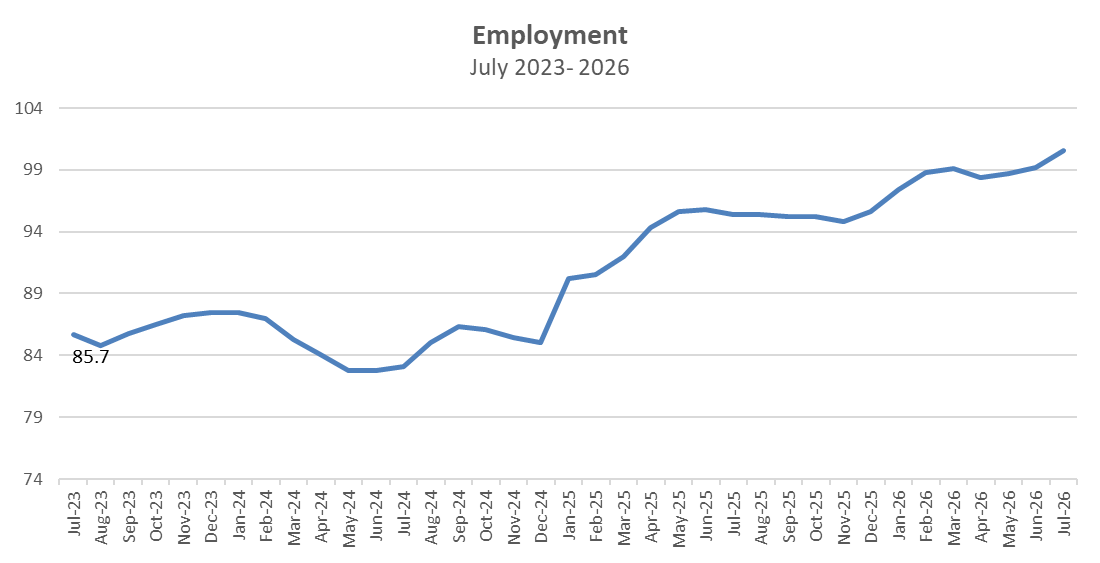
As of July 2026, the labour force of Greater Sudbury (Census Metropolitan Area) is 107,600, an increase of 1600 from June 2026. Labour Force refers to the total adult population available to the labour market at a specific time.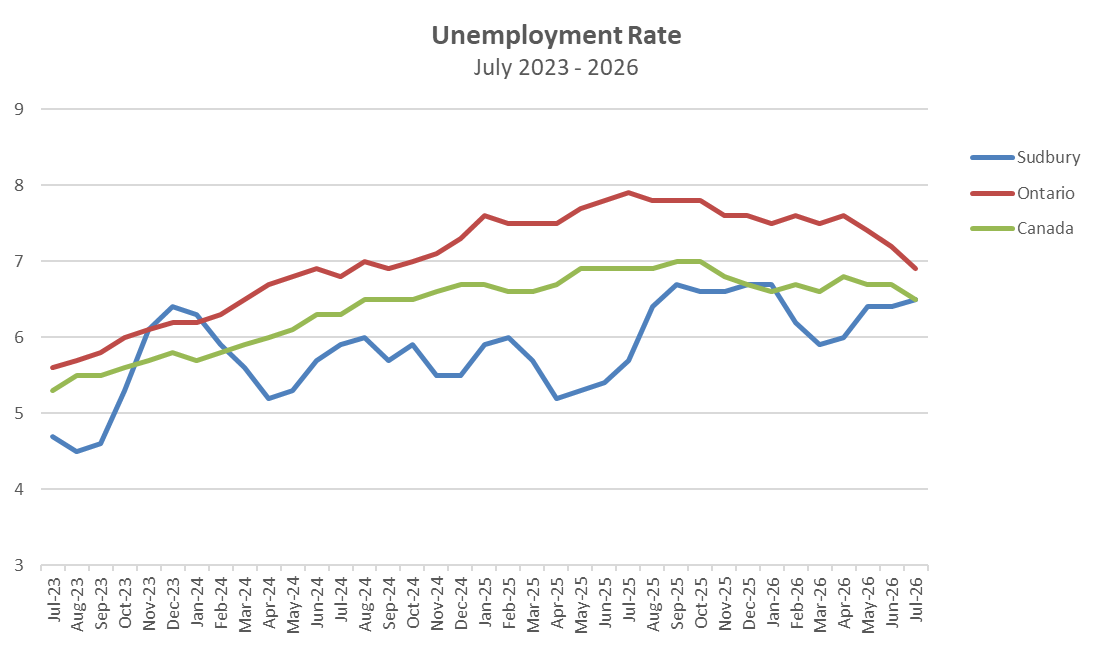
The unemployment rate for Greater Sudbury (Census Metropolitan Area) in July is 6.5%. The unemployment rate in Ontario is 6.9% and Canada is 6.5%.The number of people employed in the city is 100,600, up from 99,200 in June 2026.
The participation rate is 65.3%, an increase from June 2026.
The Greater Sudbury labour force survey results for July 2026 are in.
As of July 2026, the labour force of Greater Sudbury (Census Metropolitan Area) is 107,600, an increase of 1600 from June 2026. Labour Force refers to the total adult population available to the labour market at a specific time.
The unemployment rate for Greater Sudbury (Census Metropolitan Area) in July is 6.5%. The unemployment rate in Ontario is 6.9% and Canada is 6.5%.The number of people employed in the city is 100,600, up from 99,200 in June 2026.
The participation rate is 65.3%, an increase from June 2026.
-
A New Era Begins: Greater Sudbury Secures Strategic Partnerships for the New Event Centre
The future of entertainment in Greater Sudbury took a major step forward today as the City announced three landmark agreements that establish the organizations that will operate and anchor the new Event Centre.
Sudbury Wolves Sports & Entertainment (SWSE) has signed long-term agreements to make the new downtown Event Centre the home of the Sudbury Wolves and Sudbury Five, while Oak View Group (OVG), the global leader in premium live entertainment infrastructure and services, has been selected to manage the facility, as well as provide hospitality, premium services and community partnerships.
Together, the agreements mark the most significant milestone in the Event Centre project since construction began in fall 2025, positioning the facility to attract premier sports and entertainment while delivering exceptional experiences for residents and visitors for decades to come.
"City Council has always been clear that the investment in a new Event Centre is about more than constructing a building. It is about strengthening our community, creating new opportunities for local sports, attracting major events and entertainment, and providing a place where residents can come together and celebrate what makes Greater Sudbury special. With SWSE and Oak View Group Canada as long-term partners, we are taking an important step toward delivering on that vision," said the Mayor of the City of Greater Sudbury.
Sudbury Wolves Sports & Entertainment to Call the New Event Centre Home
The new Event Centre will become the home of the Sudbury Wolves and Sudbury Five, ensuring two of Greater Sudbury's most recognized sports franchises continue to inspire fans and bring the community together in a modern, purpose-built facility.
For generations, the Sudbury Wolves have been a source of civic pride, creating lasting memories for fans and helping shape Greater Sudbury's sporting identity. Together with the Sudbury Five, SWSE brings thousands of residents and visitors together each year through sport, helping create the energy and atmosphere that will make the new Event Centre a year-round destination.
The new Event Centre will elevate the fan experience with modern amenities, improved accessibility and premium seating designed to enhance every game and event. As the Event Centre's primary sports tenant, SWSE will help establish the facility as a vibrant, year-round destination for sports, entertainment and community events. The long-term agreements provide a strong foundation for the Event Centre from opening day, supporting downtown activity, attracting visitors and creating memorable experiences for residents and fans. The Sudbury Wolves agreement has an initial term of 15 years, while the Sudbury Five agreement has an initial term of 10 years. Both agreements include an option to renew for an additional term of equal length.
“This is a transformational moment for our community and an exciting new chapter for sports and entertainment in Greater Sudbury. At SWSE, our mission is to engage, unite and inspire Greater Sudburians through sports and entertainment, and this new Event Centre gives us an extraordinary opportunity to bring that mission to life on an even greater scale.
The Wolves have been part of the fabric of this community for generations, and the back-to-back champion Sudbury Five have built a remarkable culture of their own, giving our city another team and another reason to come together with pride. We are incredibly proud of both organizations and excited to give their players, fans and future generations a first-class home.
This is about much more than where our teams play. It’s about creating a place where families, fans and visitors come together, where unforgettable moments are made, and where we continue to build pride and energy throughout Greater Sudbury.
We all play for Sudbury, and we couldn’t be more excited about what comes next,” said Dario Zulich, Owner and CEO of Sudbury Wolves Sports & Entertainment.
Oak View Group Selected to Operate the Event Centre
Following a competitive procurement process, the City selected Oak View Group to manage and operate the new 5,800 capacity Event Centre.
OVG is a global leader in venue management, operating more than 400 venues across North America, Europe and the Middle East and bringing extensive expertise in venue operations, premium hospitality, event programming and entertainment partnerships.
In Canada, OVG manages a portfolio of management and hospitality accounts, including TD Coliseum in Hamilton, Ontario; Canada Life Place in London, Ontarop; Tribute Communities Centre in Oshawa, Ontario; WFCU Centre in Windsor, Ontario; Penticton Events Centre in Penticton, B.C.; and Vancouver Island Conference Centre in Nanaimo, B.C. OVG's Hospitality team provides services to Rogers Stadium and Enercare Centre in Toronto.
By partnering with Oak View Group, the City gains access to established entertainment industry networks, specialized operational expertise and proven best practices from hundreds of venues worldwide. This expertise will support the successful opening of the Event Centre while helping position Greater Sudbury to attract a diverse calendar of sports, concerts and live entertainment.OVG will oversee all aspects of Event Centre operations, including event bookings and promotions, ticketing, premium seating and box office services, food and beverage operations, sponsorships, and facility operations and maintenance. The agreement is for an initial term of 10 years, with the option to renew for an additional 10-year period. OVG will also make a significant capital contribution to the facility, reinforcing its long-term commitment to the success of the Event Centre.
"Selecting an experienced venue operator is one of the most important decisions we can make before opening our doors," said Shari Lichterman, Greater Sudbury CAO. "OVG brings the industry relationships, operational expertise and experience needed to position Greater Sudbury for success. Their team will help attract concerts, sporting events and other live entertainment, maximize opportunities for sponsorships and premium experiences, and support the successful opening and long-term operation of the Event Centre."
“We look forward to partnering with SWSE and the City of Sudbury on creating a world-class, state-of-the-art Event Centre here in Sudbury designed to attract top-notch entertainment, attract more visitors from across Ontario into Sudbury, and ultimately, generate a boost to the economic impact on the region,” said Tom Pistore, President, Oak View Group, Canada. “Sudbury is ready for a new arena and we’re excited to be part of this project.”
Together, the City's partnership with OVG and long-term agreements with SWSE establish a strong foundation for the Event Centre's future. Beyond strengthening sport tourism, increasing visitor spending and attracting regional, national and international events, the agreements also provide the potential to reduce operating impacts through a share of operating profits and protection from operating deficits. These agreements enable the new Event Centre to operate with significantly less reliance on taxpayer funding compared to the current operating model of the Sudbury Community Arena.
Construction of the new Event Centre continues to advance, with completion scheduled for fall 2028. As a cornerstone of the City's Transformation Project and Downtown Master Plan, the facility will become a premier destination for sports, concerts, entertainment and community events while helping strengthen the downtown, attract visitors and create new opportunities for residents and businesses alike.
The future of entertainment in Greater Sudbury took a major step forward today as the City announced three landmark agreements that establish the organizations that will operate and anchor the new Event Centre.
Sudbury Wolves Sports & Entertainment (SWSE) has signed long-term agreements to make the new downtown Event Centre the home of the Sudbury Wolves and Sudbury Five, while Oak View Group (OVG), the global leader in premium live entertainment infrastructure and services, has been selected to manage the facility, as well as provide hospitality, premium services and community partnerships.
Together, the agreements mark the most significant milestone in the Event Centre project since construction began in fall 2025, positioning the facility to attract premier sports and entertainment while delivering exceptional experiences for residents and visitors for decades to come.
"City Council has always been clear that the investment in a new Event Centre is about more than constructing a building. It is about strengthening our community, creating new opportunities for local sports, attracting major events and entertainment, and providing a place where residents can come together and celebrate what makes Greater Sudbury special. With SWSE and Oak View Group Canada as long-term partners, we are taking an important step toward delivering on that vision," said the Mayor of the City of Greater Sudbury.
Sudbury Wolves Sports & Entertainment to Call the New Event Centre Home
The new Event Centre will become the home of the Sudbury Wolves and Sudbury Five, ensuring two of Greater Sudbury's most recognized sports franchises continue to inspire fans and bring the community together in a modern, purpose-built facility.
For generations, the Sudbury Wolves have been a source of civic pride, creating lasting memories for fans and helping shape Greater Sudbury's sporting identity. Together with the Sudbury Five, SWSE brings thousands of residents and visitors together each year through sport, helping create the energy and atmosphere that will make the new Event Centre a year-round destination.
The new Event Centre will elevate the fan experience with modern amenities, improved accessibility and premium seating designed to enhance every game and event. As the Event Centre's primary sports tenant, SWSE will help establish the facility as a vibrant, year-round destination for sports, entertainment and community events. The long-term agreements provide a strong foundation for the Event Centre from opening day, supporting downtown activity, attracting visitors and creating memorable experiences for residents and fans. The Sudbury Wolves agreement has an initial term of 15 years, while the Sudbury Five agreement has an initial term of 10 years. Both agreements include an option to renew for an additional term of equal length.
“This is a transformational moment for our community and an exciting new chapter for sports and entertainment in Greater Sudbury. At SWSE, our mission is to engage, unite and inspire Greater Sudburians through sports and entertainment, and this new Event Centre gives us an extraordinary opportunity to bring that mission to life on an even greater scale.
The Wolves have been part of the fabric of this community for generations, and the back-to-back champion Sudbury Five have built a remarkable culture of their own, giving our city another team and another reason to come together with pride. We are incredibly proud of both organizations and excited to give their players, fans and future generations a first-class home.
This is about much more than where our teams play. It’s about creating a place where families, fans and visitors come together, where unforgettable moments are made, and where we continue to build pride and energy throughout Greater Sudbury.
We all play for Sudbury, and we couldn’t be more excited about what comes next,” said Dario Zulich, Owner and CEO of Sudbury Wolves Sports & Entertainment.
Oak View Group Selected to Operate the Event Centre
Following a competitive procurement process, the City selected Oak View Group to manage and operate the new 5,800 capacity Event Centre.
OVG is a global leader in venue management, operating more than 400 venues across North America, Europe and the Middle East and bringing extensive expertise in venue operations, premium hospitality, event programming and entertainment partnerships.
In Canada, OVG manages a portfolio of management and hospitality accounts, including TD Coliseum in Hamilton, Ontario; Canada Life Place in London, Ontarop; Tribute Communities Centre in Oshawa, Ontario; WFCU Centre in Windsor, Ontario; Penticton Events Centre in Penticton, B.C.; and Vancouver Island Conference Centre in Nanaimo, B.C. OVG's Hospitality team provides services to Rogers Stadium and Enercare Centre in Toronto.
By partnering with Oak View Group, the City gains access to established entertainment industry networks, specialized operational expertise and proven best practices from hundreds of venues worldwide. This expertise will support the successful opening of the Event Centre while helping position Greater Sudbury to attract a diverse calendar of sports, concerts and live entertainment.OVG will oversee all aspects of Event Centre operations, including event bookings and promotions, ticketing, premium seating and box office services, food and beverage operations, sponsorships, and facility operations and maintenance. The agreement is for an initial term of 10 years, with the option to renew for an additional 10-year period. OVG will also make a significant capital contribution to the facility, reinforcing its long-term commitment to the success of the Event Centre.
"Selecting an experienced venue operator is one of the most important decisions we can make before opening our doors," said Shari Lichterman, Greater Sudbury CAO. "OVG brings the industry relationships, operational expertise and experience needed to position Greater Sudbury for success. Their team will help attract concerts, sporting events and other live entertainment, maximize opportunities for sponsorships and premium experiences, and support the successful opening and long-term operation of the Event Centre."
“We look forward to partnering with SWSE and the City of Sudbury on creating a world-class, state-of-the-art Event Centre here in Sudbury designed to attract top-notch entertainment, attract more visitors from across Ontario into Sudbury, and ultimately, generate a boost to the economic impact on the region,” said Tom Pistore, President, Oak View Group, Canada. “Sudbury is ready for a new arena and we’re excited to be part of this project.”
Together, the City's partnership with OVG and long-term agreements with SWSE establish a strong foundation for the Event Centre's future. Beyond strengthening sport tourism, increasing visitor spending and attracting regional, national and international events, the agreements also provide the potential to reduce operating impacts through a share of operating profits and protection from operating deficits. These agreements enable the new Event Centre to operate with significantly less reliance on taxpayer funding compared to the current operating model of the Sudbury Community Arena.
Construction of the new Event Centre continues to advance, with completion scheduled for fall 2028. As a cornerstone of the City's Transformation Project and Downtown Master Plan, the facility will become a premier destination for sports, concerts, entertainment and community events while helping strengthen the downtown, attract visitors and create new opportunities for residents and businesses alike.
-
Sudbury Tourism Calls for Fresh Ideas to Drive Visitor Experiences
Sudbury Tourism invites entrepreneurs, businesses and community organizations with innovative tourism-related ideas to participate in the Wildly Unexpected Ideas event, an opportunity to present creative tourism concepts for funding consideration.
The Wildly Unexpected Ideas initiative is a special spin-off of the Tourism Development Fund. The discretionary program has a limited funding allocation and is administered by the Greater Sudbury Development Corporation (GSDC) through its Tourism Development Committee. It supports projects that enhance Greater Sudbury's visitor experience and strengthen the local tourism industry by increasing visitation, overnight stays and visitor spending.
If you have an idea, big or small, for a new attraction, event, experience or tourism product, Sudbury Tourism wants to hear from you.
Eligible applicants include for-profit and not-for-profit organizations, public- and private-sector organizations and partnerships with the City of Greater Sudbury.
Interested applicants are invited to submit an expression of interest by August 14, 2026 by completing this form.
After receiving an expression of interest, Sudbury Tourism will schedule a brief pre-screening call to discuss the concept, answer questions about the program and determine whether it is a suitable fit before inviting applicants to submit a full application.
Shortlisted applicants will be invited to present their ideas to an evaluation panel in September (date to be announced).
For more information, email sudburytourism@sudbury.ca and use "Wildly Unexpected Ideas Event" as the subject line.
The Tourism Development Fund (TDF) is administered by the GSDC and funded through Municipal Accommodation Tax revenues.
For more information about the Tourism Development Fund, visit investsudbury.ca/tourism-development-fund.
Sudbury Tourism invites entrepreneurs, businesses and community organizations with innovative tourism-related ideas to participate in the Wildly Unexpected Ideas event, an opportunity to present creative tourism concepts for funding consideration.
The Wildly Unexpected Ideas initiative is a special spin-off of the Tourism Development Fund. The discretionary program has a limited funding allocation and is administered by the Greater Sudbury Development Corporation (GSDC) through its Tourism Development Committee. It supports projects that enhance Greater Sudbury's visitor experience and strengthen the local tourism industry by increasing visitation, overnight stays and visitor spending.
If you have an idea, big or small, for a new attraction, event, experience or tourism product, Sudbury Tourism wants to hear from you.
Eligible applicants include for-profit and not-for-profit organizations, public- and private-sector organizations and partnerships with the City of Greater Sudbury.
Interested applicants are invited to submit an expression of interest by August 14, 2026 by completing this form.
After receiving an expression of interest, Sudbury Tourism will schedule a brief pre-screening call to discuss the concept, answer questions about the program and determine whether it is a suitable fit before inviting applicants to submit a full application.
Shortlisted applicants will be invited to present their ideas to an evaluation panel in September (date to be announced).
For more information, email sudburytourism@sudbury.ca and use "Wildly Unexpected Ideas Event" as the subject line.
The Tourism Development Fund (TDF) is administered by the GSDC and funded through Municipal Accommodation Tax revenues.
For more information about the Tourism Development Fund, visit investsudbury.ca/tourism-development-fund.
-
Looking for a New Lunch Plan? Updated August Schedule for Memorial Park
Summer weather is limited, so we want to make sure you make the most of it, including your lunch breaks!
Along with the weekly programming, below is the list of food trucks you can expect each Wednesday until August 26. Come out and enjoy the summer weather!Food Trucks:
August 5, 12:00 PM to 2:00 PM – Cheese All That, Pizzeria Roma, Papaya Pops
August 12, 12:00 PM to 2:00 PM – Cheese All That
August 26, 12:00 PM to 2:00 PM – Cheese All That
Weekly Programming:
Drop-in games and music - Wednesdays, 12 to 2 p.m., June 24 to August 27
Join us for facilitated games and group activities delivered by City of Greater Sudbury staff.
Yoga in the Park - Thursdays, 12 to 12:45 p.m., July 9 to August 27
Bring your mat and water bottle and meet us for Yoga in the Park! Stretch, breathe and unwind under the trees — a simple mid-day break to relax and reset. This drop-in yoga program is led by an experienced yoga instructor and is appropriate for all experience levels.
Summer weather is limited, so we want to make sure you make the most of it, including your lunch breaks!
Along with the weekly programming, below is the list of food trucks you can expect each Wednesday until August 26. Come out and enjoy the summer weather!Food Trucks:
August 5, 12:00 PM to 2:00 PM – Cheese All That, Pizzeria Roma, Papaya Pops
August 12, 12:00 PM to 2:00 PM – Cheese All That
August 26, 12:00 PM to 2:00 PM – Cheese All That
Weekly Programming:
Drop-in games and music - Wednesdays, 12 to 2 p.m., June 24 to August 27
Join us for facilitated games and group activities delivered by City of Greater Sudbury staff.
Yoga in the Park - Thursdays, 12 to 12:45 p.m., July 9 to August 27
Bring your mat and water bottle and meet us for Yoga in the Park! Stretch, breathe and unwind under the trees — a simple mid-day break to relax and reset. This drop-in yoga program is led by an experienced yoga instructor and is appropriate for all experience levels.
